Interview: Chisom Umeh
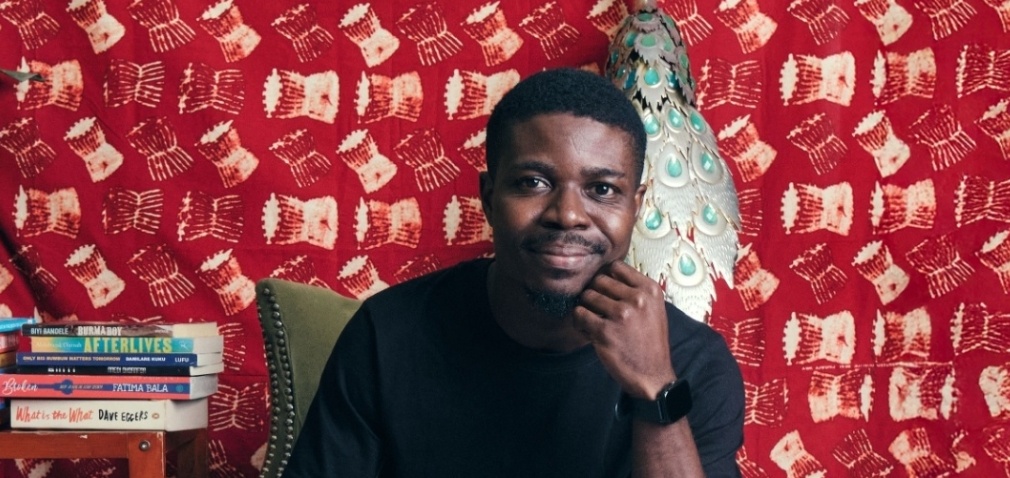
Chisom is a Nigerian fiction writer and poet. His short stories have been featured on Omenana, Apex, Clarkesworld, Year’s Best African Speculative Fiction 2023, African Ghosts anthology, Isele, Mythaxis, ZamaShorts, and elsewhere. His short story, “Ancestors’s Gift” won the 2024 Tractor Beam short story contest. He was a finalist for the Seattle Worldcon Short Story Contest, longlisted for the British Science Fiction Association Awards, and is the winner of the 2025 Nommo Award for Best African Speculative Fiction Short Story.
1) Which Nigerian city do you live in, and what is it like?
I live in Lagos and it’s quite an interesting city. It wants to be everything at the same time, so it has its hands in many places. Some parts of the city are quite urban and there are houses in estates that run into millions of dollars, but there are also shantytowns with houses built from corrugated sheets. Also, there are churches in almost every street corner, but someone can pick your pocket right in front of one if you’re not careful. Lol. It’s a jack of all trades and master of many.
2) I know relatively little about African science fiction, but I get the impression that Nigeria has a particularly lively and growing SF scene. Would you agree? If so, what do you think accounts for this growth, and how does the Nigerian scene compare with those in other African countries?
I agree with you that it has a growing speculative fiction scene, “growing” being the key word. Most people who come to literature and writing in these parts usually do so through the literary fiction and (more recently) romance route. Nigerian writers have broken a lot of ground in those areas so they’re the most popular. Genre fiction over here is still picking up steam and trying to catch up. Longtime torch bearers like Nnedi Okorafor, Wole Talabi, Tade Thompson, and others, have helped spread the word through their extensive works, but a new crop of writers are finding their voices too and doing magic. Look out for the works of folks like Pemi Aguda, Uchechukwu Nwaka, Plangdi Neple, Somto Ihezue, Osahon Ize-Iyamu, Gabrielle Emem Harry, amongst many others, and you’ll see exactly why the genre is on the rise here. I think some other things that are also driving this growth are social media, genre literary magazines, and the prospect of writers getting paid for their works. Social media has helped us find outlets willing to platform our writings, and the knowledge that we can earn something from that is enough to keep some of us writing. I think something similar too is happening across other African countries. These little fires are spreading everywhere.
From Across Time (2024)
A woman discovers a hidden message from a time-traveling lover who erased their love story to save it. No one remembers it, no proof remains except a video, and she decides to build a time machine to find her.
3) In your story From Across Time, the heroine Adaeze experiences the emotional consequences of a relationship she cannot remember. What interested you in exploring the emotional impact of a relationship that only one person bears memory of?
The thing that got me thinking about this story, like I usually say, was a short story by Vajra Chandrasekera titled Peristalsis. In the story, he used a concept that involved the two main characters watching a movie of themselves on TV. They hadn’t seen this movie before and thus didn’t know how it was going to play out, so they were keen on following it. The story moved between the characters in the real world and the version of themselves in the screen, and this interesting technique got me thinking: What if one character was on the other side and was trying desperately to communicate with the other who didn’t remember them again? Then, because I love exploring themes around time travel, I asked, again, what if they were distances from each other in time?
4) Is the woman in the video being selfless by preserving the memory of their love, or selfish by forcing Adaeze to live with a loss she would otherwise never have known?
I think it’s a bit of both. She feels terrible for taking away the memories of their beautiful relationship from Adaeze, so she wants to make up for that by telling her about it. In this way, we can say that she’s selfish. She’s inflicting memories on someone who would have otherwise lived her life perfectly without them, just to assuage her guilt. But she’s also giving Adaeze a gift, one Adaeze herself isn’t sure she’d have given back if the option presented itself, because that information is precious to her.
5)The ending suggests that the heroine values knowing the truth over the comfort of blissful ignorance. Was that an important theme you wanted to explore?
Not really. That ending just came to me as I was drawing close to completing the story and it just felt like the most natural place to leave things off.
Prerequisites for the creation of a possible world (2025)
When a futuristic simulated World's Fair unexpectedly begins to malfunction, an undercover employee must navigate the collapsing digital past while a major technological crisis threatens the entire enterprise.
6) What interests you about the futures people imagined in the past, especially those that never came true?
The present we are living now is largely as a result of the imaginings and postulations of people who lived in the past. Someone imagined humans flying like birds through the air and got to work on the idea, and today the skies are filled with airplanes. Someone once imagined communicating with someone else far away from them wirelessly, and so they began to manipulate radio waves. Today, we have cell phones. Things we have now began from past predictions, and so will things in the future. But there are also tons of things people thought about that never came to fruition; technologies (flying cars come to mind, at least for now), societies, and all. I like to think about them too, and that’s how I came to the idea of the story.
7) Why is belief in a prediction one of the four prerequisites for recreating a possible world? What role does belief play in this process?
Because I believe that the level of conviction a creator has in their idea, amongst other things, contributes greatly to whether the idea would eventually be brought to fruition. In the story, a giant AI simulator builds photorealistic worlds that people from different planets can come and take tours in. These worlds are the imaginations of earth people from the distant past. They’re predictions of how things would look like, but were ultimately wrong about. So these future people in the story then use this AI to create that world just to connect with the people of old. But the AI can only proceed to create such a world if there was sufficient evidence that the people who predicted them believed in them completely, even though it never came to pass. It’s one of the prerequisites that the AI demands, because without that, it doesn’t think that world would be believable after building it.
To the Death (2023)
A man's feud with his sister's abusive police boyfriend moves into their dreams, where the officer tries to kill him every night.
8) Your story To the Death suggests that understanding someone's deepest fears can be a powerful way to defeat them. Do you think this kind of psychological insight is a form of power?
I think so. Think of the ways big tech companies go to lengths to obtain private data of their customers. The way they use that information to eventually force their users to stay glued to their platform like zombies, eventually divulging more data. This isn’t exactly what happens in the story, but it’s a version of it. The protagonist used information gathering to access his adversary’s weaknesses, and used that in a spiritual warfare against him.
9) When the protagonist and the policeman fight in their dreams, are they experiencing lucid dreams? I've had a few myself, and I find the experience fascinating.
Would have been interesting too if they were lucid, but I just wanted to set these dreams in the actual dream realm to add to the spookiness of the story. I don’t know how well I achieved that eerie feel though. I just hope readers find the story interesting enough.
10) To conclude, what are you currently working on?
At this moment, I’m writing a story for the volume 2 of the Applied African Speculative Fiction anthology. It’s a collaborative project between speculative fiction writers and experts in different fields. So I’ll be working with a renowned expert to deliver a scientifically accurate and grounded story. On the longer term, I’m still hoping to put together my short story collection. Hopefully I manage to achieve that in the nearest future.